

Cryptosporidium
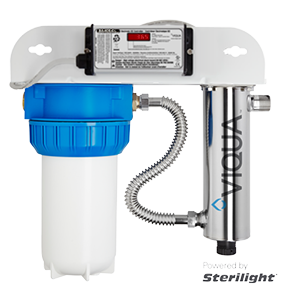
Viqua VH200-F10 | List Price: US$ Our Price: US$1,016.00 You save: $179.00 |
Cryptosporidium (crip-toe-spor-ID-ee-um) is a protozoan, a single-celled parasite, that lives in the intestines of animals and humans. This microscopic pathogen causes a disease called cryptosporidiosis (crip-toe-spor-id-ee-O-sis). The dormant (inactive) form of Cryptosporidium, called an oocyst (O-o-sist), is excreted in the feces (stool) of infected humans and animals. Cryptosporidium oocysts measure approximately 4-5 microns in size.
The most common symptom of cryptosporidiosis is watery diarrhea. There may also be abdominal cramps, nausea, low-grade fever, dehydration, and weight loss. Symptoms usually develop 4 to 6 days after infection but may appear anytime from 2 to 10 days after infection.
People with healthy immune systems will usually feel ill for several days but rarely more than two weeks. Some infected individuals may not even get noticeably sick. Often, a patient will appear to be on the verge of recovery, only to get worse again. Cryptosporidiosis may cause complications for those with illnesses or conditions such as diabetes, alcoholism, or pregnancy. The effects of prolonged diarrhea and dehydration can be dangerous, especially for the very young, the elderly, and the frail. Correspondingly, Cryptosporidiosis is most severe and long-lasting in immunocompromised individuals (whose immune systems are weak), such as people infected with HIV or AIDS, cancer patients on chemotherapy, transplant patients, or others taking medications that suppress the immune system. Despite drinking water standards, outbreaks of Cryptosporidiosis have become more common during the past 20 years, even in municipally-treated water systems. In 1987, some 13,000 people in Carrollton, Georgia became ill with cryptosporidiosis. This was the first report of the disease's spread through a municipal water system that met all state and federal drinking water standards. In the spring of 1993 in Milwaukee, Wisconsin, municipal drinking water, again within standards, was contaminated with Cryptosporidium. An estimated 400,000 people became ill and the disease contributed to the deaths of some AIDS patients.
How to Remove Cryptosporidium from Water
Cryptosporidium oocysts have tough walls that can withstand many environmental stresses and are resistant to the chemical disinfectants such as chlorine that are traditionally used in municipal drinking water systems. Water can be filtered to remove Cryptosporidium oocysts and the cysts of another common protozoan parasite, Giardia lamblia. Point-of-use filters with a filtration level of 1 micron or smaller may be used to treat the water to be used for drinking or preparing foods. The pore size of reverse osmosis (RO) membranes is also too small for oocysts to pass through. Whole house ultraviolet purifiers provide an adequate UV dose to inactivate cryptosporidium (UV dose of 40mJ/cm2 recommended).
We recommend the following home drinking water treatment systems to remove cryptosporidium and giardia cysts:
Systems featuring 0.5 micron carbon block filters:
Systems featuring membrane technology:
Systems featuring UV technology:


